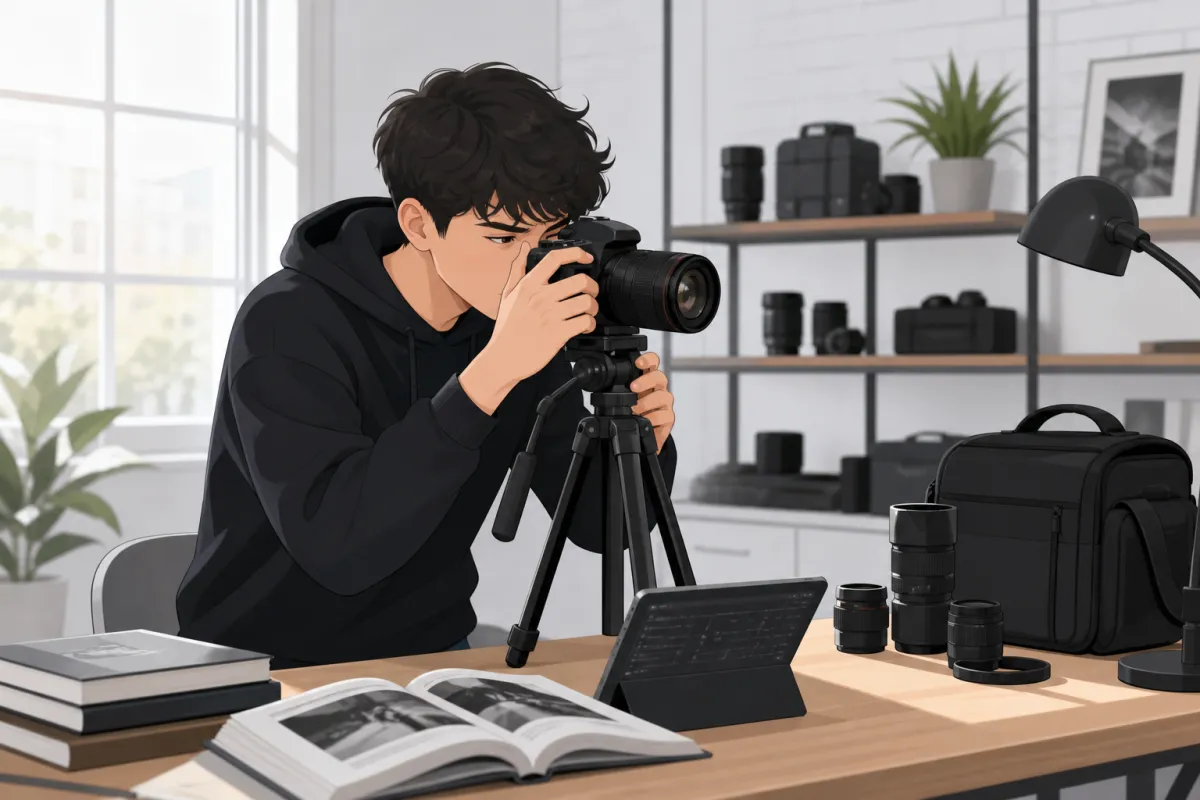
The Canon EOS Rebel T7 is a strong choice for most beginner photographers due to its affordability at $349 and user-friendly features, making it accessible for those new to DSLRs. For individuals seeking a compact option with excellent low-light performance, the Nikon Z30 at $709 is ideal. Those interested in mirrorless systems might prefer the Canon EOS R100, which offers advanced capabilities like 4K video. Each option caters to different preferences, so the best choice depends on specific needs and budget.
Criteria for Choosing a Beginner Photography Camera
Image Quality
The camera should produce sharp, clear images with accurate colours. This can be assessed by looking at sample images taken with the camera or checking reviews that include image quality comparisons.
Ease of Use
A user-friendly interface is essential for beginners to learn photography without being overwhelmed. Check for features like intuitive menus and the availability of automatic shooting modes.
Lens Compatibility
Having access to a variety of lenses allows for creative flexibility as skills develop. Research the camera's lens mount type and available lenses to ensure there are options that suit different photography styles.
Portability
A lightweight and compact camera is easier to carry, making it more likely that the photographer will take it out regularly. Consider the camera's size and weight, especially if it will be used for travel or outdoor activities.
Battery Life
Long battery life is crucial for extended shooting sessions, particularly for events or travel. Look up the manufacturer's specifications for battery performance and read user reviews regarding real-world usage.
Price and Value
The camera should fit within a budget while offering good features for the price. Compare prices across different retailers and evaluate what features are included at various price points to determine overall value.
Best Beginner Photography Cameras Comparison
- Camera Model
- Canon EOS R100
- Type
- Mirrorless
- Price
- $479
- Key Features
- 24.2MP APS-C sensor, 4K video, eye detection autofocus
- Pros
- Compact, lightweight, beginner-friendly
- Cons
- Limited advanced features
- Camera Model
- Nikon Z30
- Type
- Mirrorless
- Price
- $709
- Key Features
- Excellent low-light performance, user-friendly controls
- Pros
- Great for low-light, intuitive interface
- Cons
- Higher price point
- Camera Model
- Canon EOS Rebel T7
- Type
- DSLR
- Price
- $349
- Key Features
- 24.1MP APS-C sensor, affordable
- Pros
- Budget-friendly, good image quality
- Cons
- Bulkier than mirrorless options
- Camera Model
- Canon EOS Rebel SL3
- Type
- DSLR
- Price
- $599
- Key Features
- Guide mode for exposure settings
- Pros
- Helpful for beginners, good battery life
- Cons
- Heavier than mirrorless cameras
- Camera Model
- Nikon Z5
- Type
- Mirrorless
- Price
- $1,199
- Key Features
- Full-frame sensor, excellent image quality
- Pros
- High-quality images, user-friendly
- Cons
- Higher cost, may be overkill for beginners
- Camera Model
- Sony Cyber-shot DSC-RX100 VII
- Type
- Point-and-Shoot
- Price
- $1,298
- Key Features
- 20.1MP sensor, advanced autofocus
- Pros
- Compact, easy to use, good for travel
- Cons
- Limited manual controls
- Camera Model
- Canon EOS R50
- Type
- Mirrorless
- Price
- $680
- Key Features
- Intelligent autofocus, compact design
- Pros
- Good for beginners, lightweight
- Cons
- Lacks in-body stabilization
- Camera Model
- Budget-Friendly Options
- Type
- N/A
- Price
- Under $500
- Key Features
- Affordable DSLRs and mirrorless cameras available
- Pros
- Accessible for new photographers
- Cons
- Limited features compared to higher-end models
- Camera Model
- Essential Accessories
- Type
- N/A
- Price
- Varies
- Key Features
- Tripods, extra batteries, memory cards
- Pros
- Enhances photography experience
- Cons
- Additional costs
- Camera Model
- Common Mistakes
- Type
- N/A
- Price
- N/A
- Key Features
- Relying on viewfinder, overcomplicating settings
- Pros
- Awareness can improve results
- Cons
- Difficult to avoid without practice
- Camera Model
- Transitioning from Smartphone
- Type
- N/A
- Price
- N/A
- Key Features
- Focus on basic settings, practice
- Pros
- Easier with user-friendly cameras
- Cons
- May require adjustment period
- Camera Model
- User-Friendly Apps
- Type
- N/A
- Price
- N/A
- Key Features
- Editing and learning apps available
- Pros
- Helpful for beginners
- Cons
- Varied quality and features
Top Features to Look for in a Beginner Camera
When selecting a beginner camera, several key features can significantly enhance the photography experience. Sensor size plays a crucial role in image quality, with larger sensors generally providing better performance in low light and greater depth of field control. For instance, the Canon EOS R100 boasts a 24.2 megapixel APS-C sensor, which is suitable for producing sharp images with good colour accuracy, making it a solid choice for newcomers1.
The autofocus system is another essential consideration. A reliable autofocus system can help beginners capture clear, focused images without extensive knowledge of manual settings. Cameras like the Nikon Z30 offer excellent low-light autofocus capabilities, enabling users to shoot in various conditions with confidence2. This feature is particularly beneficial for those who may struggle with manual focusing, allowing them to concentrate on composition rather than technical details.
Ease of use is paramount for beginners, as complex menus and settings can be overwhelming. Cameras designed with user-friendly interfaces, such as the Canon EOS Rebel SL3, often include guide modes to assist new users in understanding exposure settings3. This approach simplifies the learning curve, allowing individuals to focus more on their creative vision rather than getting bogged down by technical jargon.
These features are ideal for individuals who are just starting their photography journey and may not have prior experience. The price range for beginner cameras varies, with options like the Canon EOS Rebel T7 available for around $349, making it accessible for many4. However, it is essential to balance budget with the features needed to support growth in photography skills.
Best Beginner DSLR Cameras
The Canon EOS Rebel T7 is a leading choice for beginner photographers, priced at approximately $349. It features a 24.1MP APS-C image sensor, which provides good image quality and clarity. The camera is user-friendly, making it accessible for newcomers, although it is bulkier than some mirrorless alternatives. This model is suitable for various photography styles, including landscapes and portraits, though it may not perform as well in low-light conditions compared to more advanced models.
Another strong option is the Canon EOS Rebel SL3, available for around $599. This camera includes a guide mode that helps users understand exposure settings, making it an excellent tool for learning. It offers good battery life and solid performance, although it is heavier than mirrorless cameras. This model works well for those who want to explore different photography styles while receiving assistance in mastering the technical aspects.
For individuals seeking a compact design, the Nikon Z30, priced at $709, is noteworthy. It excels in low-light performance and features user-friendly controls, making it a great choice for beginners who want to capture images in various lighting conditions. However, the higher price point may be a consideration for budget-conscious buyers.
The Canon EOS R50, priced at $680, offers intelligent autofocus but lacks features like in-body stabilization, which may limit its appeal for more serious photographers. It is lightweight and easy to use, making it suitable for beginners who prioritise portability.
Each of these DSLR options has distinct strengths and limitations, catering to different preferences and budgets. The best choice will depend on individual needs, such as desired features and specific photography interests.
Best Beginner Mirrorless Cameras
Beginner photographers looking for a compact and lightweight camera system may find mirrorless models appealing due to their technological advancements and ease of use. The Canon EOS R100, priced at $479, features a 24.2 megapixel APS-C sensor, 4K video capabilities, and eye detection autofocus, making it a strong contender for first-time users1. Its compact design and lightweight build enhance portability, particularly beneficial for those who plan to carry their camera during travels or outdoor activities.
Another option is the Nikon Z30, available for $709. Known for its excellent low-light performance and user-friendly controls, this camera is well-suited for beginners who wish to explore photography in various lighting conditions2. Its intuitive interface simplifies the shooting process, allowing newcomers to focus on composition rather than complex settings. However, the higher price point may be a consideration for those on a tighter budget.
The Canon EOS R50, priced at $680, offers intelligent autofocus and a lightweight design, catering to beginners seeking a user-friendly experience. However, it sacrifices some advanced features, such as in-body stabilization, which may be a drawback for those looking to progress in their photography skills2.
Mirrorless cameras typically offer advantages over DSLRs in terms of size and weight. For instance, they are generally lighter and more compact, making them easier to handle, especially for extended periods. This is particularly relevant when considering the bulkier nature of many DSLRs, which can be cumbersome for casual use.
While mirrorless systems may lack some features found in high-end DSLRs, they provide a solid foundation for beginners eager to learn photography. The choice among these models will depend on individual preferences, budget, and specific photographic needs.
Budget-Friendly Options for New Photographers
Several cameras priced under $500 cater to beginner photographers, providing an accessible entry point into the world of photography with varying features and performance. The Canon EOS Rebel T7 stands out at approximately $349, featuring a 24.1MP APS-C image sensor. This DSLR is known for its budget-friendly price and good image quality, making it suitable for various photography styles, although its bulkier design may not appeal to those seeking portability4.
The Canon EOS R100, priced at $479, offers a compact mirrorless option with a 24.2MP APS-C sensor, 4K video capabilities, and eye detection autofocus. This model is designed specifically for first-time users, balancing advanced features with ease of use. Its lightweight design makes it ideal for photographers on the go, although it may lack some advanced functionalities for those looking to progress1.
For those considering used options, the Canon EOS Rebel SL3 could be found within budget constraints, typically around $599 when new. It features a guide mode that assists beginners in understanding exposure settings, making it a valuable tool for learning3. However, this price point may exceed the $500 target if purchased new.
The Nikon Z30, while slightly above the budget at $709, is worth mentioning due to its excellent low-light performance and user-friendly controls, which are beneficial for beginners2. It is compact and intuitive, making it a strong option for those who may shoot in various lighting conditions.
These budget-friendly cameras offer a range of capabilities, allowing beginners to explore their photography interests without a significant financial commitment. Each model has its strengths and limitations, making it essential to consider personal preferences and specific photography needs when selecting a camera.
Essential Accessories for Beginners
Photography accessories can significantly enhance the experience for new photographers, making it easier to capture high-quality images. Essential items include lenses, tripods, and camera bags, each serving a unique purpose that contributes to overall photographic success.
Lenses are crucial as they determine the type of images that can be captured. For example, a versatile zoom lens allows beginners to explore different focal lengths without the need to switch lenses frequently. This flexibility is particularly beneficial when transitioning from smartphone photography, where changing perspectives is often limited. However, it is important to note that high-quality lenses can add substantial costs, sometimes exceeding the price of the camera itself.
Tripods are another essential accessory, providing stability for long exposures and low-light photography. A sturdy tripod can prevent camera shake, which is especially important when shooting landscapes or during evening events. While many beginners might overlook this item, it becomes increasingly valuable as one begins to experiment with different photography styles. The price of tripods can vary widely, but budget-friendly options are available for around $50 to $100.
Lastly, a good camera bag is vital for protecting equipment while on the go. A well-organised bag not only safeguards the camera and accessories but also makes it easier to access gear quickly during a shoot. Beginners should consider bags that offer padding and compartments designed specifically for camera gear, with prices typically ranging from $30 to $150 depending on size and brand.
These accessories are suitable for beginners who want to enhance their photography journey. Investing in these items can improve the quality and creativity of images, allowing for a more enjoyable and successful photography experience.
Common Mistakes to Avoid When Choosing a Camera
Beginners often fall into several common pitfalls when selecting their first camera, which can hinder their photography experience. One frequent mistake is overemphasising megapixels. While higher megapixel counts can contribute to image quality, they are not the sole determinant of a camera's performance. For instance, the Canon EOS R100 features a 24.2 megapixel APS-C sensor, which is sufficient for most beginner needs, but it’s the camera's overall functionality and usability that matter more in practical scenarios1.
Brand loyalty can also cloud judgment. New photographers may gravitate towards familiar brands without considering other options that may better suit their needs. For example, the Nikon Z30, priced at $709, is praised for its excellent low-light performance and user-friendly controls, making it ideal for beginners, yet it might be overlooked by those fixated on more popular brands2. Exploring various brands can lead to discovering models that align better with personal preferences and shooting styles.
Another common error is overcomplicating camera settings. Beginners often become overwhelmed by advanced features, which can distract from the creative process. Starting with basic settings like aperture, shutter speed, and ISO allows for a more manageable learning curve5. Focusing on essential aspects of photography can build confidence and competence over time.
Finally, relying too much on the camera's viewfinder for exposure accuracy can lead to poor results, such as overexposed or underexposed images6. Understanding how to evaluate exposure through the camera's histogram or using manual settings can improve outcomes significantly.
Being aware of these mistakes can help beginners make informed choices and ultimately enjoy a more fulfilling photography experience.
How to Transition from Smartphone to DSLR/Mirrorless
Transitioning from a smartphone to a DSLR or mirrorless camera involves understanding the fundamental differences in usability and features. Smartphones are designed for convenience, often prioritising portability and ease of use, while dedicated cameras offer more advanced functionalities such as interchangeable lenses, larger sensors, and manual controls. For instance, the Canon EOS R100 features a 24.2 megapixel APS-C sensor and is tailored for first-time mirrorless users, providing 4K video and intelligent autofocus, which enhances creative possibilities1. In contrast, DSLRs like the Canon EOS Rebel T7, priced at approximately $349, offer solid image quality but may feel bulkier, which could be less appealing for those accustomed to the sleekness of smartphones4.
To facilitate a smoother transition, beginners should consider a few strategies. Familiarity with basic photography concepts, such as aperture, shutter speed, and ISO, is crucial since these settings play a significant role in image quality and creativity. It is advisable to start with automatic settings before gradually exploring manual controls to avoid feeling overwhelmed5. Additionally, practising with the camera in various shooting conditions can build confidence and improve understanding of how different settings affect the outcome.
Investing in user-friendly models, such as the Nikon Z30, which is known for its excellent low-light performance and intuitive controls, can ease the learning curve for newcomers2. Understanding the limitations of a smartphone, such as its fixed lens and limited low-light capabilities, can motivate users to appreciate the versatility offered by dedicated cameras. Ultimately, transitioning successfully requires patience and practice, making it essential to embrace the learning process while exploring new photographic opportunities.
User-Friendly Camera Apps for Beginners
Several apps can assist beginners in learning photography basics, including exposure, composition, and editing. These applications are designed to simplify the learning process and enhance photographic skills.
One notable app is Camera+ 2, which offers a range of features including manual controls for exposure, focus, and white balance. This app helps beginners understand how different settings affect their images, making it easier to grasp fundamental photography concepts. It is available for iOS devices and costs around $5, providing a cost-effective way to enhance photography skills.
Snapseed is another popular choice, known for its powerful editing capabilities. This app allows beginners to edit photos with precision, offering tools for adjusting exposure, colour balance, and sharpness. Its user-friendly interface makes it suitable for those with little to no editing experience. Snapseed is free on both iOS and Android platforms, making it accessible for all users.
Photopills stands out for its planning tools, helping photographers understand light conditions and composition. It provides information on the position of the sun and moon, allowing users to plan their shots effectively. This app is particularly useful for outdoor photography and is priced at approximately $10, which can be a worthwhile investment for those serious about improving their skills.
For those looking to enhance their composition skills, Composition app offers a variety of guides and overlays to help users frame their shots effectively. It includes grids and guides based on techniques like the rule of thirds and golden ratio, making it easier for beginners to create visually appealing images. This app typically costs around $3, which is reasonable for the benefits it offers.
These apps cater to different aspects of photography, providing beginners with valuable tools to improve their skills. Each app has its strengths, making it essential for users to consider their specific learning needs and preferences before making a choice.
Pros and Cons of Beginner Photography Cameras
| Advantages | Weaknesses |
|---|---|
|
|
Who Should Choose What
If you want a compact camera for travel, consider the Canon EOS R100, as it is lightweight and easy to use, making it suitable for capturing spontaneous moments on the go. Its 24.2 megapixel APS-C sensor delivers quality images without the bulk of traditional DSLRs, appealing to those prioritising portability.
If you plan to shoot in various lighting conditions, the Nikon Z30 is a strong choice due to its excellent low-light performance and intuitive controls. This model allows beginners to experiment confidently, ensuring that low-light situations do not hinder creative expression.
If you aim to explore photography without breaking the bank, budget-friendly options like the Canon EOS Rebel T7 are ideal. Priced around $349, this camera offers solid image quality and user-friendly features, allowing newcomers to learn the basics without a significant financial commitment.
If you prefer a camera that encourages learning through manual controls, the Nikon Z30 again stands out. This model provides opportunities to delve into aperture, shutter speed, and ISO settings, making it perfect for those who wish to develop their skills beyond automatic shooting modes.
If you value versatility in your photography, a camera with interchangeable lenses, such as the Nikon Z30, is recommended. This flexibility allows for experimentation with different perspectives and styles, catering to a wide range of photographic interests as skills evolve.
Good to know
- What camera should a beginner photographer get?
The Canon EOS Rebel T7 is a popular choice for beginners due to its affordability and user-friendly features, priced at approximately $349. It includes a 24.1MP APS-C image sensor, which provides solid image quality while offering a guide mode to help new users understand exposure settings.
- What is the best affordable camera for a beginner photographer?
The Canon EOS Rebel T7 stands out as one of the most affordable DSLRs on the market, making it an excellent option for beginners looking to explore photography without a significant financial commitment. At $349, it provides essential features that cater to new photographers.
- Is Nikon or Canon better for beginners?
Both Nikon and Canon offer strong options for beginners, but the Nikon Z30 is particularly noted for its excellent low-light performance and user-friendly controls, priced at $709. This makes it an ideal choice for those who want to experiment in various lighting conditions.
- What features should I look for in a beginner camera?
Beginners should seek cameras with user-friendly interfaces, guide modes, and the ability to shoot in automatic and manual settings. Features like a good autofocus system and a decent sensor size, such as the 24.2 megapixel APS-C sensor found in the Canon EOS R100, can significantly enhance the learning experience.
- What are some good beginner cameras for photography?
The Canon EOS Rebel T7 and Nikon Z30 are both excellent beginner cameras, with the former being budget-friendly at $349 and the latter offering superior low-light performance at $709. Additionally, the Canon EOS R100 is a compact mirrorless option that provides advanced features like 4K video capabilities.
- Can I use a smartphone for photography instead of a camera?
Smartphones can be used for photography, especially for casual shooting, but they typically lack the versatility and advanced features of dedicated cameras. For instance, cameras like the Nikon Z30 allow for interchangeable lenses and better performance in low-light conditions, which smartphones may struggle with.
- What is the 20-60-20 rule in photography?
The 20-60-20 rule suggests that 20% of the time should be spent on planning, 60% on shooting, and 20% on post-processing. This approach helps photographers allocate their efforts effectively, ensuring a balanced focus on each stage of the photographic process.
Conclusion: What to Choose
Selecting a beginner camera largely depends on specific needs and preferences. For those prioritising affordability and ease of use, the Canon EOS Rebel T7, priced at approximately $349, is a solid choice, providing essential features and a guide mode to facilitate learning. If low-light performance and intuitive controls are more critical, the Nikon Z30 is recommended, allowing for creative exploration in various lighting conditions. Beginners should avoid overly complex models that may hinder the learning process, as well as cameras that lack user-friendly interfaces. Understanding personal photography goals is essential; for a comprehensive overview of essential photography concepts, refer to Photography Basics: Essential Tips for Beginners.
Evidence and sources
[2] The Best Cameras for Beginners in 2023 Under $1,200
[3] The best cameras for beginners in 2023 | PopPhoto | Popular Photography
[4] $349 for a camera and lens! Is this the best beginner camera deal ever? | Digital Camera World
[5] The Top Ten Mistakes New Photographers Make and How to Avoid Them — Master Your Photography
[6] 5 Beginner Photography MISTAKES to Avoid (VIDEO) | Shutterbug