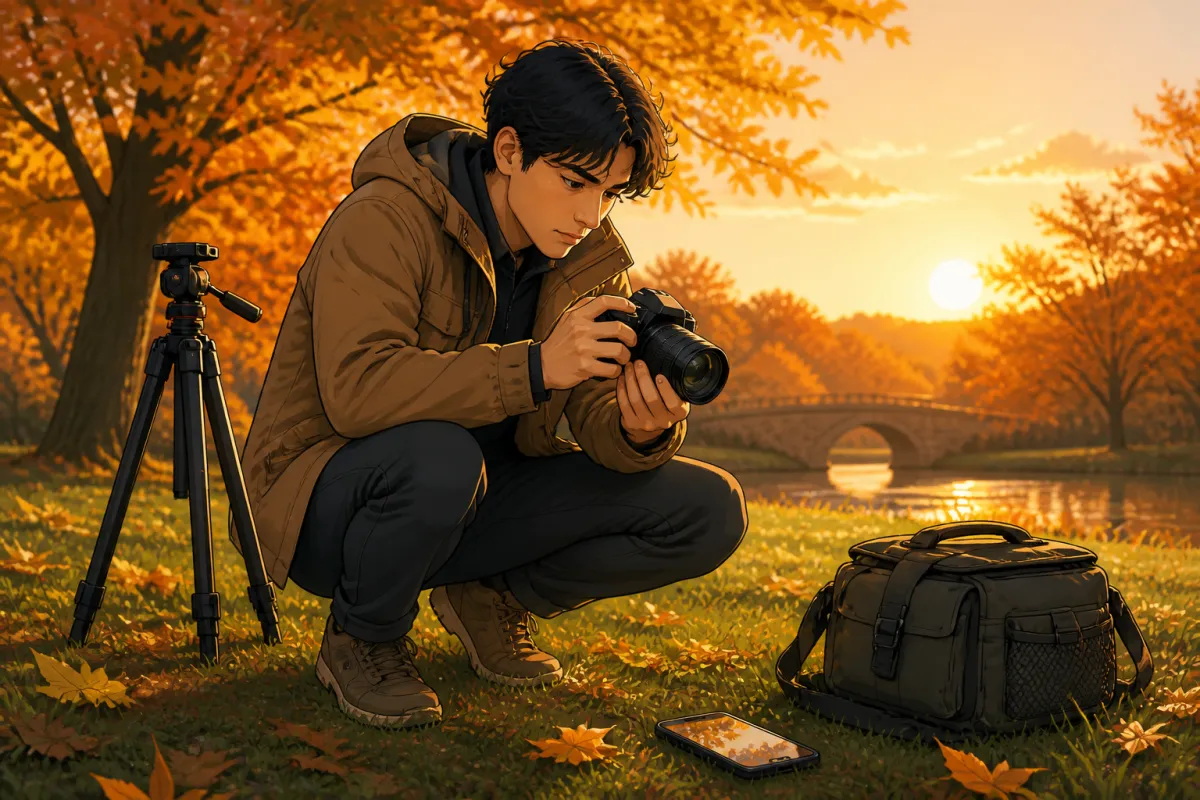
Beginner photography tips include mastering the exposure triangle, utilising the Rule of Thirds for composition, and shooting during the Golden Hour for optimal lighting. Focus on these key areas to enhance skills:
Understanding Your Camera
Different types of cameras cater to various needs and preferences, making it crucial for beginners to choose the right one. DSLR cameras offer versatility and high-quality images with interchangeable lenses, making them suitable for those who wish to explore photography in-depth. Mirrorless cameras, on the other hand, are lighter and more compact, providing similar image quality without the bulk of a DSLR. Smartphones have evolved significantly, boasting high-quality cameras that are user-friendly and perfect for capturing spontaneous moments, making them a viable option for beginners1.
Understanding basic camera settings is essential for achieving the desired results in photography. The exposure triangle, consisting of aperture, shutter speed, and ISO, plays a fundamental role in controlling the brightness and mood of an image1. Aperture, measured in f-stops, dictates the depth of field; a lower f-stop number results in a shallower depth of field, which can help isolate subjects from the background3. Shutter speed determines how long the camera's sensor is exposed to light; a slow shutter speed can introduce motion blur, while a fast shutter speed freezes action3. ISO adjusts the camera's sensitivity to light, with higher values suitable for low-light conditions but potentially introducing noise.
Holding the camera properly is often overlooked, yet it can significantly impact photo quality. Using both hands to stabilise the camera reduces the chances of blurry images caused by camera shake4. Positioning the camera at eye level often helps in composing a shot more effectively, allowing for a more natural perspective.
In summary, selecting the right camera type, mastering essential settings, and learning how to hold the camera correctly are foundational steps for beginners. Engaging with these aspects will not only improve photographic skills but also enhance the overall experience of capturing images.
The Importance of Lighting
Lighting is a crucial element in photography that can dramatically affect the mood, quality, and overall impact of an image. Natural light, such as sunlight, provides a soft, diffused quality that is often preferred for portrait and landscape photography. Conversely, artificial light sources, like flash or studio lights, can create stark contrasts and shadows, which may be desirable in certain situations but require careful management of exposure settings. Understanding the balance between these two types of light is essential for achieving the desired effect in photographs.
The golden hour, which occurs shortly after sunrise or before sunset, is renowned for its warm glow and soft lighting. This period produces flattering tones and enhances textures, making it an ideal time for capturing portraits or landscapes. Photographers often note that shooting during this time can significantly improve the quality of their images, as the light is more forgiving and creates a natural ambience2. For those looking to make the most of this phenomenon, planning shoots around these times can yield stunning results.
Low light conditions present a unique challenge for photographers. In such settings, the exposure triangle—aperture, shutter speed, and ISO—becomes even more critical. A larger aperture (lower f-stop number) allows more light to enter the camera, which can help in isolating subjects and achieving a shallower depth of field3. Adjusting the shutter speed is also vital; a slower shutter speed can introduce motion blur, while a faster speed may require an increase in ISO to maintain exposure, which can lead to noise in the image3. Techniques such as stabilising the camera with both hands or using a tripod can help mitigate the effects of camera shake, ensuring sharper images in low light4.
In summary, mastering the nuances of lighting—both natural and artificial—along with understanding how to effectively shoot in low light conditions, is essential for beginner photographers. By leveraging the golden hour and manipulating exposure settings, photographers can elevate their work and create compelling images that resonate with viewers.
Mastering Composition Techniques
Effective composition is crucial for creating visually appealing photographs. The Rule of Thirds stands out as a foundational technique, where the frame is divided into thirds both horizontally and vertically. Key elements should be placed along these lines or at their intersections to create a more dynamic image2. For instance, when photographing a landscape, positioning the horizon along the top third line can enhance the foreground's impact, while placing a tree at an intersection can draw the viewer's eye.
Leading lines serve as another powerful composition tool. These are natural lines within the scene, such as roads, rivers, or pathways, that guide the viewer’s gaze toward the main subject. For example, a winding road can lead the eye through the image and create a sense of depth. This technique is particularly effective in landscape photography, where leading lines can help establish a journey or direction within the frame5.
Framing involves using elements in the scene to create a "frame" around the subject. This can be achieved with branches, windows, or doorways that draw attention to the main focal point. By doing this, the subject is highlighted, making the image more engaging. Conversely, poor composition can result in cluttered images where the subject is lost amidst distracting elements.
Balance and symmetry are essential for creating harmonious photographs. A balanced composition may involve placing subjects of equal visual weight on either side of the frame. Symmetrical compositions can evoke a sense of calm and order, while asymmetrical compositions can create tension and interest. For instance, a symmetrical shot of a building can convey stability, whereas an off-centre subject in an asymmetrical image can evoke a sense of movement or change.
Understanding these composition techniques can significantly enhance the quality of photographs. Regular practice and analysis of both successful and unsuccessful compositions will lead to improved skills. For beginners, experimenting with these techniques in various scenarios will build a stronger portfolio and a more intuitive understanding of visual storytelling.
Essential Photography Techniques
Mastering essential photography techniques is vital for beginners aiming to improve their skills. Focus, exposure, and depth of field are foundational elements that influence the quality of photographs. Understanding how to use manual settings is equally important, as it allows for greater creative control over images. Regular practice helps solidify these concepts and enhances overall photographic ability.
Focus is crucial for ensuring that the subject of the photograph is sharp and clear. Beginners should experiment with different focus modes, such as single-point and continuous autofocus, to determine which works best in various scenarios. For instance, single-point focus is ideal for static subjects, while continuous focus is beneficial for moving subjects, such as animals or children. It is essential to check the focus before taking a shot, as an out-of-focus image can detract from the overall impact.
Exposure, governed by the exposure triangle—aperture, shutter speed, and ISO—determines how light interacts with the camera sensor. Adjusting these settings allows photographers to control the brightness and mood of their images1. A larger aperture (lower f-stop number) lets in more light and creates a shallower depth of field, which is useful for isolating subjects from their backgrounds3. Conversely, a fast shutter speed can freeze motion, while a slow shutter speed may introduce motion blur, which can be desirable in certain artistic contexts3.
Depth of field plays a significant role in composition. A shallow depth of field highlights the subject by blurring the background, while a deep depth of field keeps more elements in focus, which is ideal for landscapes. Beginners should practice adjusting the aperture to see its effect on depth of field, gaining a better understanding of how to isolate subjects effectively.
Engaging with these techniques through regular practice is crucial for improvement. The 20-60-20 rule suggests that 20% of time should be spent on planning, 60% on shooting, and 20% on post-processing6. This structured approach ensures that beginners not only focus on the technical aspects while shooting but also allocate time for refining their skills through editing and learning from their experiences. As proficiency develops, photographers can begin to explore more advanced techniques and styles, enhancing their portfolios in the process.
Post-Processing Basics
Post-processing is a critical aspect of photography that allows for image enhancement and correction of mistakes made during shooting. Familiarity with photo editing software, such as Adobe Lightroom and Photoshop, is essential for beginners looking to refine their images. Lightroom offers a user-friendly interface focused on organisational tools and basic adjustments, while Photoshop provides advanced editing capabilities for more intricate edits, such as retouching and compositing. For those starting their journey, Lightroom is often recommended due to its straightforward workflow and powerful features tailored for photographers.
Basic editing techniques can significantly improve the quality of photographs. Cropping is a fundamental technique that helps to eliminate distractions and focus on the subject. Adjusting exposure is equally important; it can brighten or darken images to ensure they convey the intended mood. Colour correction, which involves adjusting white balance and saturation, is crucial for achieving accurate colours that reflect the scene as perceived by the eye. Beginners should experiment with these adjustments to understand how they affect the overall image and develop a personal editing style.
Shooting in RAW format is highly beneficial for post-processing. Unlike JPEG, which compresses image data and limits editing flexibility, RAW files retain more information, allowing for greater adjustments in exposure, contrast, and colour without significant loss of quality. This is particularly useful in challenging lighting conditions, where the ability to recover details in shadows and highlights can make a substantial difference. For example, if an image is slightly underexposed, a RAW file can often be adjusted to recover lost details without introducing noise, which is a common issue with JPEGs.
Engaging in post-processing not only enhances the final image but also serves as a valuable learning experience. By critically analysing and adjusting their work, beginners can develop a deeper understanding of their photographic style and preferences. Regular practice with editing software will complement shooting skills, ultimately leading to a more polished portfolio.
Common Mistakes to Avoid
Beginners often encounter several common mistakes that can hinder their photography development. These errors include overexposure, poor composition, and neglecting focus, all of which can detract from the overall quality of images. Recognising these pitfalls and learning from them is crucial for improvement.
Overexposure occurs when too much light hits the camera sensor, resulting in washed-out images. This is particularly common when shooting in bright conditions without adjusting settings like aperture, shutter speed, or ISO. For example, if a beginner uses a low shutter speed on a sunny day without compensating, highlights may be lost, and details in brighter areas can disappear. To avoid this, understanding the exposure triangle is essential; adjusting one or more of its components can help maintain the desired brightness and mood of a photograph1.
Poor composition can also undermine the impact of a photo. Beginners may fail to consider the placement of subjects within the frame, leading to cluttered or unbalanced images. Techniques such as the Rule of Thirds can significantly enhance composition by guiding the placement of key elements along imaginary lines dividing the frame into thirds2. For instance, when photographing a landscape, placing the horizon along the top third line can create a more engaging image. Experimenting with composition techniques like leading lines and negative space can further improve visual storytelling5.
Neglecting focus is another frequent mistake. An out-of-focus subject can render an image ineffective, especially if the intent is to capture sharp details. Beginners should become familiar with different focus modes, such as single-point and continuous autofocus, to achieve better results. For instance, single-point focus works well for stationary subjects, while continuous focus is beneficial for moving subjects4. Regularly checking focus before taking a shot can prevent missed opportunities.
Learning from these mistakes involves critical analysis and practice. Engaging with the photography community, whether through online forums or local clubs, can provide valuable feedback and inspiration6. Reviewing past work and identifying areas for improvement can also accelerate the learning process. Embracing the journey of growth and experimentation will ultimately lead to a more polished portfolio and a stronger understanding of photography fundamentals.
Building Your Photography Portfolio
Creating a photography portfolio is essential for showcasing skills and attracting potential clients or opportunities. Selecting the best work is crucial; aim to include only the most impactful images that represent personal style and technical ability. A common approach is to curate a selection of 10 to 20 photographs that highlight versatility while maintaining a cohesive aesthetic. For instance, if a photographer excels in both portrait and landscape photography, showcasing a balanced mix can demonstrate a broad skill set.
Diversity within a portfolio enhances its appeal. Including various subjects, styles, and techniques can attract a wider audience and showcase adaptability. For example, a portfolio featuring portraits taken during the golden hour, landscapes utilising the rule of thirds, and street photography can illustrate a comprehensive understanding of composition, lighting, and depth of field2. This approach is particularly effective if the photographer is looking to work in different genres, as it allows potential clients to see the breadth of expertise.
Presenting work online is a key element in building a portfolio. A well-organised website or social media profile serves as a digital gallery that can reach a global audience. When creating an online portfolio, ensure that images are high-quality and optimised for web viewing. Using platforms like Adobe Portfolio or Squarespace can simplify the process, providing templates that are visually appealing and easy to navigate. Including a brief description of each project or image can also provide context, helping viewers understand the artistic intent behind the work.
Regularly updating the portfolio is important as skills develop. This could mean replacing older images with newer, stronger pieces or adding new projects that reflect evolving styles and techniques. Engaging with the photography community through feedback and critiques can further refine the portfolio and ensure it remains relevant and impactful6. By consistently curating and presenting work, photographers can establish a strong visual identity that resonates with their audience.
Engaging with the Photography Community
Joining the photography community offers numerous benefits for beginners looking to enhance their skills and gain inspiration. Engaging with fellow photographers, whether through local clubs or online forums, provides opportunities for feedback, collaboration, and learning from one another’s experiences. This interaction can be particularly valuable in understanding technical aspects of photography, such as the exposure triangle, which includes aperture, shutter speed, and ISO1. For instance, discussing the impact of different settings on image quality can lead to deeper insights and improved photographic techniques.
Online platforms and social media are effective ways to connect with a broader audience. Websites like Flickr or photography-specific groups on Facebook allow beginners to share their work and receive constructive criticism. Participating in photography challenges or themed contests can motivate individuals to experiment with new styles and techniques. For example, a challenge focusing on natural light may encourage beginners to explore shooting during the golden hour, when lighting conditions are optimal for creating captivating images2. This engagement not only fosters creativity but also helps in building a supportive network of like-minded individuals.
Attending workshops and exhibitions is another beneficial way to immerse oneself in the photography community. Workshops often provide hands-on experience with guidance from experienced photographers, allowing beginners to learn valuable skills in a practical setting. Exhibitions showcase diverse styles and approaches, exposing attendees to various artistic visions and techniques. For example, a workshop on composition might delve into techniques like the Rule of Thirds or leading lines, enhancing participants' understanding of how to create compelling images25.
Involvement in the photography community can significantly influence a beginner's growth. By seeking feedback, participating in discussions, and attending events, photographers can expand their knowledge and refine their craft. This collaborative environment not only inspires personal development but also enriches the overall photographic journey.
Common Mistakes and Misconceptions
Ignoring the Importance of Post-Processing
Many beginners underestimate the role of post-processing in photography, believing that the image captured in-camera is the final product. This misconception can lead to missed opportunities for enhancing photographs, as editing allows for adjustments in exposure, colour correction, and cropping. Engaging in post-processing can significantly elevate the quality of images and help photographers develop their unique style7. It is crucial to view editing as an integral part of the photographic process rather than an afterthought.
Misunderstanding the Exposure Triangle
A common error among novice photographers is not fully grasping the exposure triangle, which consists of aperture, shutter speed, and ISO. This lack of understanding can result in poorly exposed images, such as overexposed highlights or underexposed shadows. For example, if a beginner uses a high ISO in bright conditions without adjusting shutter speed or aperture, the resulting image may be grainy and washed out1. Familiarity with how these three components interact is essential for achieving the desired brightness and mood in photographs.
Neglecting Composition Techniques
Beginners often overlook the significance of composition techniques, leading to unbalanced or cluttered images. Many may not realise that applying methods like the Rule of Thirds can greatly enhance the visual appeal of photographs by guiding the placement of subjects2. For instance, positioning a horizon along the top third line can create a more engaging landscape shot. Experimenting with various composition strategies, such as leading lines and negative space, can help to tell a more compelling story through imagery5.
Failing to Engage with the Photography Community
New photographers frequently miss out on the benefits of engaging with the photography community, opting to work in isolation instead. This approach can limit learning opportunities and access to constructive feedback. Participating in online forums or local clubs can provide valuable insights and inspiration from more experienced photographers6. Seeking out connections within the community encourages growth and fosters a supportive environment, which is particularly beneficial for skill development.
Poor Camera Handling Technique
A prevalent mistake among beginners is improper camera handling, which can lead to blurry images due to camera shake. Many may not realise the importance of stabilising the camera with both hands or using a tripod in low-light situations4. Understanding how to hold a camera correctly can significantly reduce the chances of capturing shaky photos, allowing for sharper and more professional-looking images. Practising proper handling techniques is vital for improving overall photographic quality.
Good to know
- How to get better at photography as a beginner?
Improving photography skills as a beginner involves a combination of practice, education, and engagement with the community. Regularly taking photos and experimenting with different settings and techniques helps to develop a personal style and technical proficiency. Joining photography groups or forums allows for feedback and learning from experienced photographers, which can accelerate growth.
- What is the 20-60-20 rule in photography?
The 20-60-20 rule suggests that photographers should allocate their time effectively: 20% for planning, 60% for shooting, and 20% for post-processing. This approach ensures that adequate time is spent on each critical aspect of photography, allowing for thoughtful composition and effective editing to enhance the final images6.
- What are 7 basic tips for taking good photographs?
Key tips for taking good photographs include understanding the exposure triangle, mastering composition techniques like the Rule of Thirds, and shooting during the Golden Hour for optimal lighting2. Additionally, ensuring proper camera handling to avoid shake, experimenting with different perspectives, and engaging in post-processing can significantly improve image quality.
- How do beginner photographers start out?
Beginner photographers typically start by familiarising themselves with their camera settings and basic photography concepts. Engaging in hands-on practice, such as taking photos in various environments and lighting conditions, is crucial. Joining photography communities or taking classes can provide valuable insights and support during the initial learning phase.
- What are some beginner photography tips with a phone?
Smartphones often come equipped with advanced camera features, making them a great starting point for beginners. Tips include using natural light to enhance images, experimenting with composition techniques, and utilising editing apps to improve photos post-capture1. Focusing on the subject and minimising distractions in the frame can also elevate the overall quality of smartphone photography.
- What are beginner photography tips and tricks?
Beginner photography tips include mastering the basics of the exposure triangle, understanding how to hold a camera properly to reduce shake, and applying composition techniques like leading lines14. Regularly reviewing and editing photos can help identify areas for improvement and develop a unique photographic style.
- What are basic photography techniques?
Basic photography techniques encompass understanding the exposure triangle, mastering composition methods, and learning to use natural light effectively. Techniques such as adjusting aperture for depth of field and utilising different shutter speeds to capture motion are essential for creating impactful images13. Familiarity with these fundamentals can significantly enhance a beginner's photography skills.
Conclusions
- Master the exposure triangle by understanding how aperture, shutter speed, and ISO interact to achieve the desired exposure.
- Focus on composition techniques, such as the Rule of Thirds, to create visually appealing images that engage viewers.
- Engage with the photography community for feedback, inspiration, and opportunities to learn from others.
- Practice proper camera handling techniques to minimise shake and improve image sharpness.
- Embrace post-processing as an essential part of photography to enhance images and develop a personal style.
To further enhance skills, consider exploring the Best Beginner Photography Cameras: A Comprehensive Guide.
Explore More Photography Insights
Discover additional tips and guides to enhance your skills.
View More ResourcesEvidence and sources
[1] Photography for beginners: master the basics
[2] Beginner's Photography Guide
[3] Photography Fundamentals for Beginners
[4] Beginners guide - How to use a camera and take photos | Amateur Photographer
[5] 32 Essential Photography Tips for Beginners